Companies · Oura
Oura and the Rise of the Smart Ring
In 13 years, a start-up from Oulu, Finland, turned a sleep-tracking ring into a business with $1.75 billion in annual sales, a patent arsenal and an IPO it chose to postpone. How Oura built the category, and where its claims are contested.
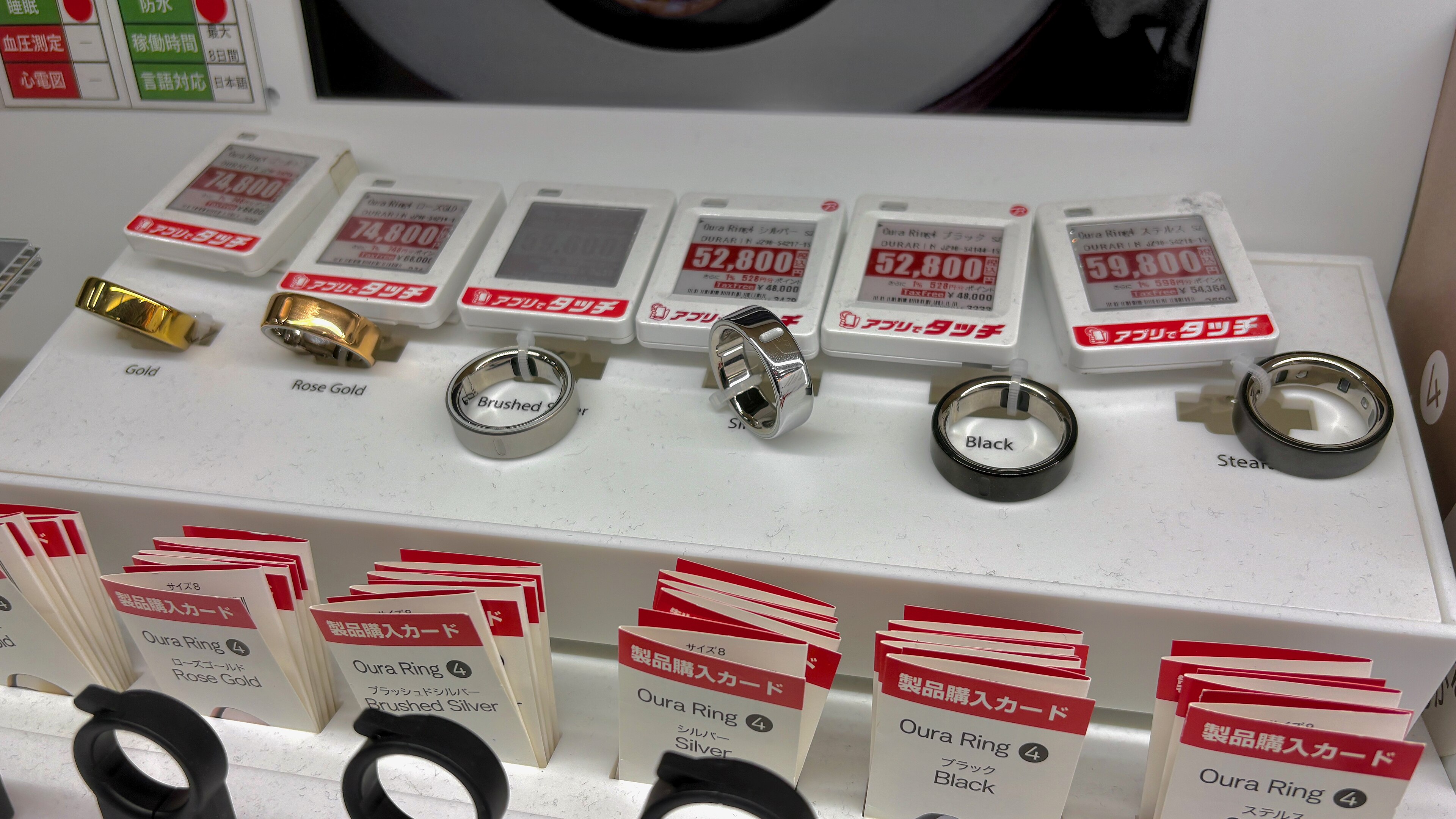
On Sept. 21, 2026, a company that sells a ring with no screen told Wall Street what it thought it was worth. Oura Inc. set a range of $40 to $44 a share for 50 million shares, to list on the Nasdaq as OURA, according to its amended registration statement.1 At the midpoint, the offering would have valued the smart ring maker at up to $15 billion, TechCrunch calculated. Eight days later, on Sept. 29, Oura postponed it, citing uncertainty in the IPO market.2
Tom Hale, the chief executive, said in a statement that the company would wait, because “we have the luxury of choosing our moment,” TechCrunch reported.2 Revenue in the nine months to June 30, 2026, was $1.21 billion, up 74 percent from a year earlier, and Oura counted 5 million paying members, the filing shows.1 On Nov. 10, the company said revenue for the fiscal year that ended Sept. 30 was about $1.75 billion, up 92 percent, as it agreed to buy Counsel Health, an AI-based primary-care start-up, for $625 million in cash, TechCrunch, MedTech Dive and STAT reported.345
Thirteen years on, Oura is the company that turned the smart ring from a crowdfunding curiosity into a product category, and the company whose patents, prices and subscription now set the terms for its rivals. Oura held more than 80 percent of the smart ring market, according to an IDC report cited by TechCrunch in October 2025.6 Competitors from Samsung to Bengaluru’s Ultrahuman have had to price against it, design around it or pay it royalties. (For the whole market, see The Alexi Report: The Smart Ring Market 2026.)
This profile traces how a sleep tracker from Oulu got there, and where its claims are contested: in court, in the scientific literature and among its own members.
A swan, a ring and 15 hours on Kickstarter
Oura began in 2013 in Oulu, in northern Finland. Its founders, Petteri Lahtela, Kari Kivelä and Markku Koskela, had worked in product, engineering and research at companies in the city’s technology industry, including Polar and Nokia, according to Oura’s official history.7 The company was first called Jouzen, after joutsen, the Finnish word for swan; the name was changed to Oura before launch. In the early years, salaries were sometimes delayed for months, the history says.7
The idea was narrow and, at the time, unusual: measure how the body recovers overnight. At the Launch Festival in San Francisco in March 2015, Lahtela told the audience that everyone knows the charge level of their phone, then asked, “do you know the charge level of your body?” according to the company’s account.7 That first ring was made of zirconium ceramic, ran about three days on a charge and was to sell for $250 in U.S. sizes 6 to 13, New Atlas reported in June 2015.8
The Kickstarter campaign opened on Aug. 18, 2015, with 500 early rings at $199 instead of $299, according to Quantified Self, whose post thanked Lahtela and Hannu Kinnunen as “the Oura founders.”9 The $100,000 goal was reached in 15 hours; over 37 days the campaign gathered about 2,400 pre-orders and $650,000 without public relations or paid advertising, Oura says.7

Independent testing came early, and it was mixed. Researchers at SRI International compared the ring with polysomnography, the sleep-laboratory standard, in 41 adolescents and young adults. The ring detected sleep with 96 percent sensitivity but correctly identified wakefulness only 48 percent of the time, and agreement on individual sleep stages ranged from 51 to 65 percent, according to the study in Behavioral Sleep Medicine, first published online in March 2017.10
From biohackers to the NBA bubble
The second-generation ring, unveiled at the Slush conference in Helsinki in November 2017, was titanium, less than half the size of the original and rated for seven days of battery life, The Gadgeteer reported.11 By August 2019, Oura says, it had sold more than 100,000 of them in over 100 countries.7
The commercial push was led by Harpreet Singh Rai, who joined as an investor in 2016, became president in 2017 and chief executive in 2018, according to Oura’s later announcement of his departure.12 In March 2020, Rai announced a $28 million Series B from Forerunner Ventures, Google’s Gradient Ventures and Square. Oura had sold more than 150,000 rings and employed more than 100 people, TechCrunch reported.13
The pandemic then turned a sleep gadget into a research instrument. In March 2020, researchers at the University of California, San Francisco, started the TemPredict study using Oura rings. Its first results, from 50 participants who reported COVID-19, showed that rises in finger temperature were visible in the ring data and tracked self-reported fever, according to a December 2020 paper in Scientific Reports; two authors disclosed ties to Oura.14 The NBA offered players the ring in its plan to restart the 2019–20 season, TechCrunch reported,15 and the Pentagon’s Defense Innovation Unit gave about 400 service members a Garmin watch and an Oura ring to test an illness-warning algorithm, Defense One reported.16
In May 2021, Oura raised a $100 million Series C led by The Chernin Group and Elysian Park, the Los Angeles Dodgers’ investment arm, bringing its total funding to $148.3 million. It had sold more than 500,000 rings, TechCrunch reported.17
The membership gamble
Oura Ring Gen3, announced in October 2021, added daytime heart-rate tracking, green LEDs alongside red ones, better temperature sensing and period prediction. It cost $300 to $400 depending on the finish and, unlike earlier models, needed a subscription of about $6 a month to unlock most of its insights; owners of earlier rings could upgrade without paying it, CNET reported.18 Rai said the fee would fund research and new app content.18
Many buyers did not see it that way. Moving metrics behind a monthly paywall after customers paid a steep price for the hardware was “an understandably hard pill” for some to swallow, TechCrunch’s Brian Heater wrote.19 On Dec. 1, 2021, Oura announced that Rai was stepping down and that Michael Chapp, the chief operating officer, would serve as interim chief executive.12 Hale, previously president of Momentive, the parent of SurveyMonkey, took over in March 2022, according to the prospectus,1 and his appointment was announced in late April. In an interview with TechCrunch that week, he defended the subscription model but conceded that the company had misjudged buyers who, he said, expect a device to deliver its features when they pay for it.20
“I think that was a miscalculation on the part of the company.”Tom Hale, Oura’s chief executive, on the Gen3 subscription, to TechCrunch (2022)
The model stayed. Oura sold its millionth ring in March 2022, TechCrunch reported,19 and in April it said it had raised capital at a $2.55 billion valuation, Front Office Sports reported.21 Four years later, the subscription is the highest-margin part of the business. Membership costs $5.99 a month or $69.99 a year in the United States. Membership revenue rose from $75.5 million in fiscal 2024 to $158.5 million in fiscal 2025 and $240.5 million in the nine months to June 2026, about a fifth of sales, according to the S-1.1 Those memberships carry an 89 percent gross margin, TechCrunch reported from the filing.22 Oura says more than 94 percent of ring activations convert to paying members and that its weighted-average 12-month retention is about 85 percent.1
The mix is also the business’s tension. Hardware still produced about 80 percent of revenue in the latest period, and average revenue per ring fell to $311, from $332 in fiscal 2024, the filing shows. About 49 percent of hardware revenue came through retailers such as Amazon, Best Buy, Costco and Target, and less than 20 percent came from outside the United States.1
Inside the ring
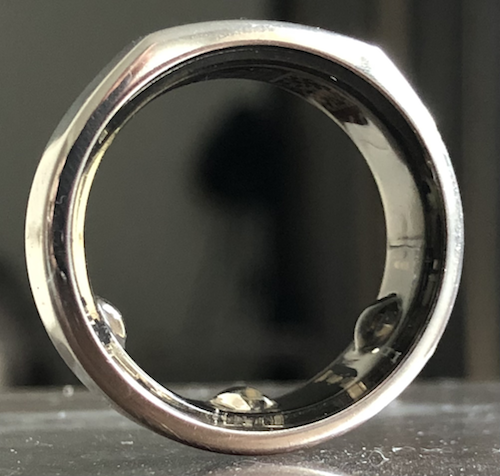
Every recent Oura ring works on the same principles. Light-emitting diodes shine into the finger and photodiodes measure how much light returns as blood pulses, a technique called photoplethysmography, or PPG. A digital sensor tracks skin-temperature trends, and an accelerometer records movement. On Ring 5, green and infrared LEDs alternate to measure heart rate, heart-rate variability and breathing rate, while red and infrared LEDs estimate blood oxygen, according to Oura’s product page.23 Algorithms turn those signals into the sleep, readiness and activity scores members see. (Our explainer on how smart rings track health covers the physiology.) Oura argues in its prospectus that the finger, dense with blood vessels, yields a PPG signal up to 100 times stronger than the wrist.1
Oura Ring 4, launched on Oct. 3, 2024, at $349, was titanium inside and out, recessed its sensors into a smooth inner surface and widened sizes to 4 through 15, TechCrunch and Engadget reported.2425 The company placed its optical sensors asymmetrically so the ring could choose among light paths for each wearer, a system it calls Smart Sensing. A teardown by TechInsights counted two multicolor LEDs and three photodiodes supporting up to 18 signal pathways, a 26 milliampere-hour battery, and estimated that the hardware bill of materials stayed below 39 percent of the $349 retail price even at volumes of about 50,000 units.26 Oura rates Ring 4 at five to eight days per charge.27
In October 2025 came Oura Ring 4 Ceramic, made of zirconia and priced at $499, along with the company’s first charging case, TechCrunch reported.28 Then, on May 28, 2026, Oura announced Ring 5, which it describes as the world’s smallest smart ring and 40 percent smaller than Ring 4, TechCrunch and MakeUseOf reported; it began shipping on June 4.29301 It measures 6.09 millimeters wide and 2.28 millimeters thick and weighs from 2 grams, and Oura rates it at six to nine days per charge, according to its specifications.23 The prospectus describes low-profile sensor domes, more efficient LEDs and 12 signal pathways.1 Black and silver versions cost $399; four other finishes cost $499, TechCrunch reported; in Europe the prices are €429 and €529, GSMArena reported.2931
The smaller shell came with trade-offs. Ring 5 is offered only in sizes 6 to 13, Oura’s help center says,32 there is no ceramic version, and the $99 charging case is sold separately.33 The Verge’s reviewer found the same sensors and roughly the same battery life as Ring 4 and called it “mostly an aesthetic update.”33
| Model | Launched | U.S. price at launch | Shell | Battery (Oura’s claim) | Sizes | Width × thickness, weight |
|---|---|---|---|---|---|---|
| Original Ōura ring | 2015 (Kickstarter, Aug.) | $250 announced; Kickstarter pledges from $199 | Zirconium ceramic | About 3 days | 6–13 | – |
| Oura Ring Gen2 | Nov. 2017 (shipped 2018) | $239–$899 pre-order | Titanium | 7 days | – | Less than half the original’s size |
| Oura Ring Gen3 | Oct. 2021 | About $300–$400 + $5.99/mo | Titanium | 7 days | – | – |
| Oura Ring 4 | Oct. 2024 | From $349 | Titanium inside and out | 5–8 days | 4–15 | 7.90 × 2.88 mm; 3.3–5.2 g |
| Oura Ring 4 Ceramic | Oct. 2025 | $499 | Zirconia ceramic | – | 4–15 | – |
| Oura Ring 5 | May 2026 (shipped June 4) | $399–$499 | Titanium | 6–9 days | 6–13 | 6.09 × 2.28 mm; from 2 g |
Sources: New Atlas and Quantified Self (original); The Gadgeteer (Gen2); CNET (Gen3); TechCrunch and Oura (Ring 4); TechCrunch (Ceramic); Oura, Oura Help Center and TechCrunch (Ring 5). The membership price is from Oura’s S-1. A dash means no figure in the sources we verified. Accessed Nov. 21, 2026.
Oura does not own or operate manufacturing facilities. It relies on contract manufacturers with operations abroad and buys some components from a single source, its prospectus says; it names Estonia, Finland, Mexico, South Korea, China and the Netherlands among countries where it does business or where components and finished rings are produced, all subject to U.S. tariffs.1 In August 2025, it announced a manufacturing facility in Texas to serve the Department of Defense, Slate reported.34
Money at speed
In November 2024, Dexcom, the glucose-monitor maker, invested $75 million in a deal that valued Oura at more than $5 billion and tied the two companies’ apps together, TechCrunch and MedTech Dive reported.3536 In December, Oura closed a $200 million Series D, which included Fidelity and Dexcom, at $5.2 billion, TechCrunch reported.37 In October 2025, it raised more than $900 million in a round led by Fidelity Management & Research, with ICONIQ, Whale Rock and Atreides, at “approximately $11 billion,” the company said, according to TechCrunch, Tech.eu and SiliconANGLE.63839 Some reports have described that round as $875 million at $10.9 billion.40
Sales kept pace. Revenue rose from $406.8 million in fiscal 2024 to $907.9 million in fiscal 2025, the S-1 shows,1 and, by the company’s account, to about $1.75 billion in fiscal 2026, with $533 million in the final quarter alone.3 Profit was thin until recently: net income was $3.6 million in fiscal 2024 and $0.01 million in fiscal 2025, then $60.8 million in the first nine months of fiscal 2026. Gross margin fell from 65 percent in fiscal 2024 to 52 percent in fiscal 2025, then recovered to 55 percent.1
Unit sales tell the same story. Oura shipped 1.0 million rings in fiscal 2024, 2.3 million in fiscal 2025 and 3.1 million in the first nine months of fiscal 2026. That made 3.6 million in the 12 months to June 30, which the company calculates was about 2 percent of the 212 million wearable devices IDC counted worldwide in that period.1
On March 31, 2026, the Finnish operating company, Oura Health Oy, became a subsidiary of a new Delaware parent, Oura Inc., based in San Francisco. It employed about 1,350 people in 11 countries at the end of June.1 The IPO itself would have paid existing holders more than the company: of the 50 million shares offered, 36.5 million came from selling stockholders, and Forerunner planned to sell its entire 9.3 percent stake. Oura planned to use most of its own proceeds to cover taxes on employee shares that would vest at the listing, TechCrunch reported.22 Eli Lilly and funds affiliated with Dragoneer indicated interest in buying up to $100 million and $300 million of stock, respectively.1
Oura has also been buying. It acquired Proxy, a digital-identity start-up, in May 2023 in an all-equity deal that reportedly valued Proxy at $165 million, SecurityWeek reported;41 Veri, a Helsinki metabolic-health app, in September 2024;42 Sparta Science, an enterprise health-data platform, in October 2024;43 and Doublepoint, a gesture-recognition start-up, in March 2026, on undisclosed terms.44 The Counsel Health deal, announced on Nov. 10, would put physicians inside the Oura app; the company expects it to close near the end of 2026, according to its announcement.45
The patent wall
Oura has spent much of the last three years in trade court. On March 13, 2024, it filed a complaint at the U.S. International Trade Commission accusing Ultrahuman, RingConn and Circular of infringing three patents; the commission opened Investigation No. 337-TA-1398, according to its notice in the Federal Register.46 Circular settled in June 2024 and agreed to pay royalties under a multiyear license, according to Oura and TechCrunch.4748
On Aug. 21, 2025, the commission found a violation of Section 337 on one patent, U.S. Patent No. 11,868,178, and issued a limited exclusion order and cease-and-desist orders against the remaining respondents, its final determination shows.49 After the presidential review period ended on Oct. 21, 2025, the orders took effect against Ultrahuman, barring it from importing new rings, and Oura announced a settlement and royalty-bearing license with RingConn.50 In December, the commission removed RingConn from the exclusion order.51 (See our profiles of Ultrahuman and RingConn.)
The fight with Ultrahuman did not end there. Ultrahuman filed its own patent suit against Oura in the Delhi High Court in August 2025 and redesigned its ring, TechCrunch reported.52 After U.S. Customs and Border Protection cleared the redesigned Ring Pro in March 2026, Oura sued again on Oct. 22 in federal court in Texas, asserting two other patents, one issued two days before the filing. Mohit Kumar, Ultrahuman’s chief executive, said the company would defend itself, TechCrunch reported.53
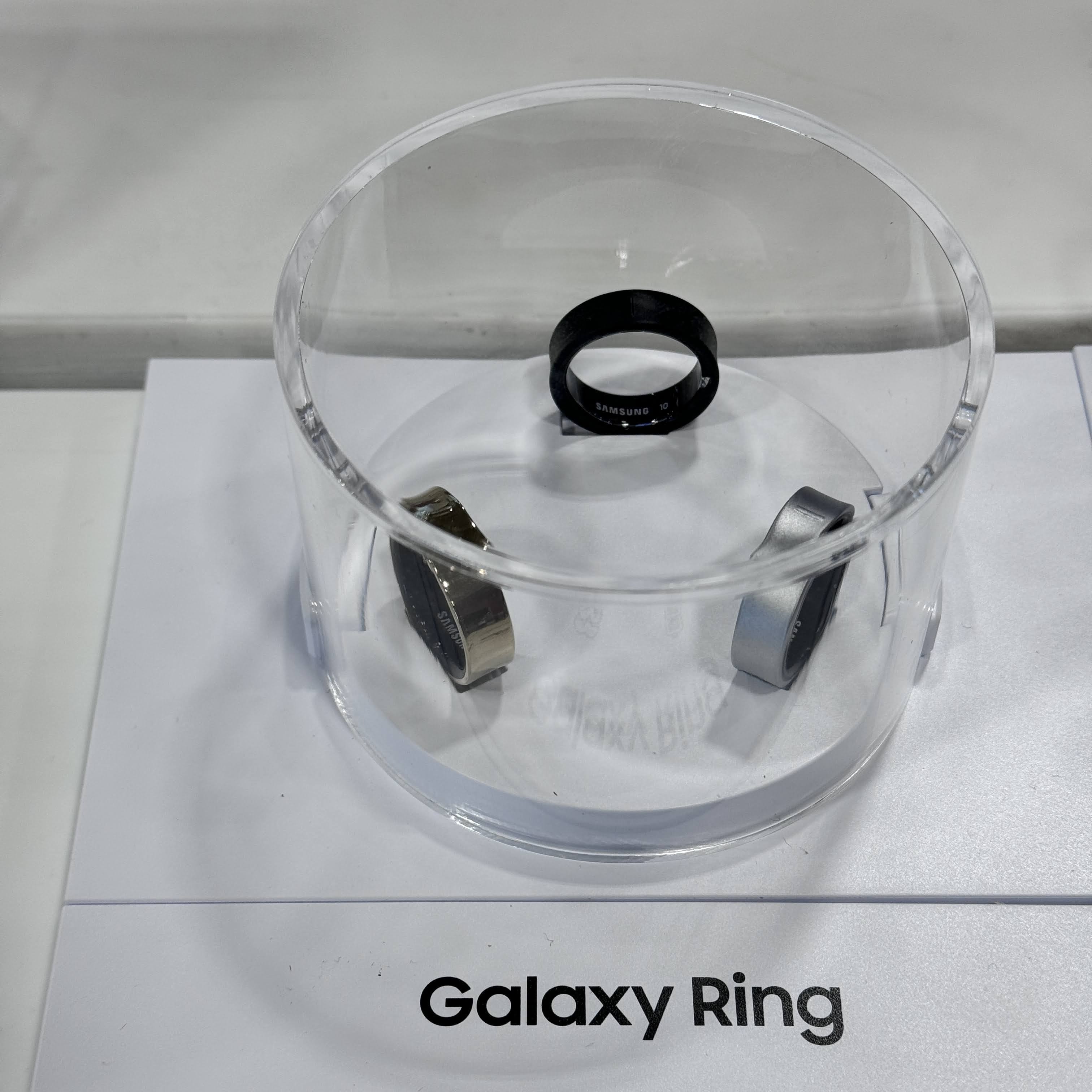
Samsung is the largest target. In May 2024, Samsung asked a federal court to declare that its Galaxy Ring did not infringe Oura’s patents; the case was dismissed, Android Authority reported.54 On Nov. 18, 2025, Oura filed a new ITC complaint against Samsung, Reebok, Zepp Health and Nexxbase, maker of the Luna ring (Investigation No. 337-TA-1468), the commission’s notice shows.55 Nexxbase agreed to a consent order keeping the Luna Ring out of the U.S., according to Oura.56 In December, Samsung answered with its own ITC complaint, asserting four of its patents against Oura (No. 337-TA-1478).57 Oura called both the Samsung complaint and a separate December 2024 suit by Omni MedSci, which seeks about $120 million, without merit in its prospectus.1 (See our report on the Galaxy Ring.) The company says it held more than 1,140 patents and applications at the end of June.1
What the science supports
Oura’s marketing leans on accuracy. The company says more than 175 peer-reviewed publications draw on its data and methods;1 the validation studies are encouraging but narrower than the marketing. A 2021 paper by Kinnunen and Marco Altini, an adviser to the company, reported 96 percent accuracy for telling sleep from wake and 79 percent for four sleep stages across 440 nights against polysomnography, in the journal Sensors.58 A 2024 study of the Gen3 ring in 96 Japanese adults found no significant difference from polysomnography for most whole-night measures, but when the ring scored a stretch of the night as wake it was right only about two-thirds of the time; the researchers disclosed funding from Oura, according to Sleep Medicine.59 A Brigham and Women’s Hospital study of 35 adults over a single night found that Oura’s estimates of time in each sleep stage did not differ significantly from polysomnography, while Fitbit’s and Apple’s did for some stages; its lead author sits on Oura’s medical advisory board, the paper discloses.60 A meta-analysis of six studies and 388 participants, published in 2025 by authors who declared no conflicts, found no statistically significant differences from sleep-lab measures, in OTO Open.61
Those studies were mostly small, short and in healthy adults. In August 2026, Clarkson Law Firm filed a proposed class action in San Francisco alleging that Oura’s sleep-stage estimates have “a coin flip’s chance of being correct” and that sleep staging requires sensors on the scalp. Oura said it stands behind its science, that the ring is not a medical device or a substitute for a clinical sleep study, and that it would defend itself, TechCrunch reported.62
Regulation sets the other boundary. Oura markets its products as general wellness products that it believes fall outside the Food and Drug Administration’s device rules, its prospectus says.1 All of its current features rely on that wellness exemption, though the company has received FDA authorization to run a study of a blood-pressure algorithm, MedTech Dive reported.63 The Blood Pressure Signals feature introduced with Ring 5 monitors 30-day trends in nighttime PPG data for patterns related to blood pressure, the S-1 says.1
Data, the Pentagon and trust
Trust matters more because of who wears the ring. About 72 percent of Oura’s members are women, the company says.1 The ring was the first wearable to integrate with Natural Cycles, an FDA-cleared contraception app that uses its temperature data, although Oura’s chief product officer, Holly Shelton, said the ring itself is not intended for birth control, Scientific American reported.64
Oura’s relationship with the U.S. military began in 2019, a spokesperson told Slate. The Department of Defense is Oura’s largest enterprise customer, and on Aug. 27, 2025, the company announced its Texas facility to “better meet the needs of the DoD,” Slate reported.34 The announcement mentioned Palantir, the data-analytics company, whose FedStart hosting environment Oura’s separate enterprise platform must use to meet government security requirements. On Reddit and TikTok, some members said they would stop wearing the ring; several who spoke to Slate were women who used it to track their menstrual cycles and worried about reproductive-health data.34 Oura confirmed the FedStart arrangement but denied any broad partnership, France’s L’ADN reported.65
Hale called the reports misinformation. The government cannot see members’ data, the Palantir relationship is a small commercial contract inherited through an acquisition, and the systems are not connected, he said at a Fortune conference. “We will never sell your data to anyone ever,” he added, TechCrunch reported; the publication noted that Oura’s data is encrypted in transit but not end-to-end.66 Andrea Matwyshyn, a Penn State law and engineering professor, told Slate it was “definitely a buyer-beware situation,” and noted that most companies comply with legal demands for data.34
The prospectus also discloses suits over equity: one by Peter Attia, who alleges he is owed shares for advisory services, with a jury trial set for February 2027, and two by Rai, filed in November 2025 and May 2026. Oura says each is without merit.1
- 2013Founded in Oulu, Finland, as Jouzen by Petteri Lahtela, Kari Kivelä and Markku Koskela.
- Aug. 2015Kickstarter campaign raises about $650,000 from about 2,400 pre-orders.
- Nov. 2017Titanium Gen2 ring unveiled at Slush in Helsinki.
- 2018Harpreet Singh Rai becomes chief executive.
- 2020$28 million Series B; UCSF TemPredict study, NBA restart and Defense Innovation Unit trial use the ring.
- Oct. 2021Gen3 launches with a monthly membership of about $6; Rai steps down in December.
- 2022One millionth ring sold; Tom Hale becomes chief executive; $2.55 billion valuation.
- Mar. 2024ITC complaint against Ultrahuman, RingConn and Circular.
- Oct.–Dec. 2024Oura Ring 4; Dexcom invests $75 million; $5.2 billion valuation.
- Aug.–Oct. 2025ITC finds infringement; Ultrahuman import ban takes effect; Ring 4 Ceramic; about $11 billion valuation.
- May–June 2026Confidential IPO filing; Oura Ring 5 ships.
- Sept.–Nov. 2026IPO launched and postponed; agreement to buy Counsel Health for $625 million.
What comes next
Oura’s next market is medicine itself. With Counsel, members will be able to move from a change in their data to a licensed physician who can diagnose, order tests and prescribe, the company says.45 Counsel’s chief executive, Muthu Alagappan, is to become Oura’s chief clinical AI officer, TechCrunch reported, citing Bloomberg.3 That moves Oura closer to the regulated territory its wellness strategy has so far avoided, and the prospectus says the company expects some future features to be regulated as medical devices.63
The competition is closing in. Subscription-free rivals such as RingConn and Ultrahuman have increased the pressure to innovate, TechCrunch noted when Ring 5 launched,29 Ultrahuman says its Ring Pro remains on sale in the U.S. despite Oura’s new suit,53 and Samsung’s complaint against Oura is pending at the ITC.1 IDC expects global smart ring shipments to reach 4.9 million units in 2026, TechCrunch reported, a market Oura has largely defined.53 Abroad, Oura is still early: it launched in India only in March 2026, at ₹28,900, about $313, TechCrunch reported.67
The company that once set out to raise $100,000 on Kickstarter now has a $2.2 billion offering on hold and a $625 million acquisition pending. The ring at the center of it all is now 2.28 millimeters thick.
How we reported this
Financial and operating figures come from Oura’s amended Form S-1 filed with the SEC on Sept. 21, 2026, unless another source is named; Oura’s fiscal year ends Sept. 30. The fiscal 2026 total is the company’s announced figure and had not appeared in an audited filing by Nov. 21, 2026. ITC dates and outcomes come from the commission’s notices in the Federal Register. Study results come from the published abstracts on PubMed, including the authors’ conflict-of-interest statements. Product specifications and battery life are Oura’s claims. Oura was not asked to comment for this article.
Sources and notes
- Oura Inc., Amendment No. 1 to Form S-1 Registration Statement. U.S. Securities and Exchange Commission (EDGAR), Sept. 21, 2026.
- Oura shelves its $2.2B IPO, citing 'uncertainty' in the market. TechCrunch, Sept. 29, 2026.
- Oura to acquire AI-native primary care startup Counsel Health for $625M. TechCrunch, Nov. 10, 2026.
- Oura makes bet on AI in healthcare with $625M Counsel Health buy. MedTech Dive, Nov. 11, 2026.
- Oura to acquire Counsel Health for $625 million, placing a big bet on AI care. STAT (Mario Aguilar), Nov. 10, 2026.
- Smart ring maker Oura raises $900M from Fidelity. TechCrunch, Oct. 14, 2025.
- The Origins and Evolution of Oura Ring. Oura (The Pulse blog), Feb. 10, 2025.
- Oura ring watches you while you sleep. New Atlas, June 25, 2015.
- Oura Ring on Kickstarter: Sleep and Activity Tracking On A Finger. Quantified Self (Gary Wolf), Aug. 18, 2015.
- The Sleep of the Ring: Comparison of the ŌURA Sleep Tracker Against Polysomnography (de Zambotti et al.). Behavioral Sleep Medicine, via PubMed, Epub March 21, 2017; print 2019.
- Oura announces a new sleeker fitness ring and I want one!. The Gadgeteer, Dec. 3, 2017.
- Gratitude and Next Chapter. Oura (The Pulse blog), Dec. 1, 2021.
- Oura raises $28 million for its health and sleep tracking ring. TechCrunch, March 17, 2020.
- Feasibility of continuous fever monitoring using wearable devices (Smarr et al.). Scientific Reports, via PubMed, Dec. 14, 2020.
- The lengthy plan to restart the NBA season features fitness rings for temperature tracking. TechCrunch, June 17, 2020.
- The US Military's Latest Wearables Can Detect Illness Two Days Before You Get Sick. Defense One, Sept. 22, 2020.
- Fitness ring maker Oura raises $100M. TechCrunch, May 4, 2021.
- The $300 Oura Ring Gen3 improves heart and health sensors, adds subscription fee. CNET, Oct. 26, 2021.
- Oura sells its millionth ring. TechCrunch, March 24, 2022.
- Oura's new CEO discusses the future of the smart ring. TechCrunch, April 27, 2022.
- Oura Raises Capital at $2.55B Valuation. Front Office Sports, April 6, 2022.
- Oura's $2.2B IPO is mostly a payday for existing shareholders. TechCrunch, Sept. 21, 2026.
- Meet Oura Ring 5 (product page). Oura, accessed Nov. 21, 2026.
- Oura Ring 4 debuts slimmer design, additional sizes, and improved sensing starting at $349. TechCrunch, Oct. 3, 2024.
- Oura's fourth-generation smart ring gets smaller and smarter. Engadget, Oct. 3, 2024.
- Oura Ring Gen 4 Teardown. TechInsights, May 22, 2025.
- Oura Ring 4 (product page). Oura, accessed Nov. 21, 2026.
- Oura launches Ring 4 Ceramic collection, new charging case, and a 'health panel' feature. TechCrunch, Oct. 1, 2025.
- Oura unveils its Ring 5 with a thinner, lighter design starting at $399. TechCrunch, May 28, 2026.
- Oura Ring 5 finally makes smart rings worth wearing — if you trust the company with your health data. MakeUseOf, May 28, 2026.
- Oura Ring 5 announced with slim design, updated sensors and blood pressure monitoring. GSMArena, May 28, 2026.
- Discover Oura Ring 5. Oura Help Center, accessed Nov. 21, 2026.
- Less is more with the Oura Ring 5. The Verge, July 12, 2026.
- Your favorite health wearable has an unexpected—and dystopian—partner. Slate (Sarah Sloat), Oct. 2, 2025.
- Oura valued at $5B following deal with medical device firm Dexcom. TechCrunch, Nov. 19, 2024.
- Dexcom invests $75M in Ōura, agrees to integrate smart rings and CGMs. MedTech Dive, Nov. 20, 2024.
- Oura closes $200M round, bringing its valuation to $5.2B. TechCrunch, Dec. 19, 2024.
- Oura raises over $900M, valuing it at "approximately $11BN". Tech.eu, Oct. 14, 2025.
- Oura raises more than $900M for wearable health tech smart ring. SiliconANGLE, Oct. 14, 2025.
- Oura is reportedly eyeing a September IPO that could value it at more than $16B. TechCrunch, Aug. 24, 2026.
- Cybersecurity M&A Roundup: 36 Deals Announced in May 2023. SecurityWeek, June 5, 2023.
- Oura has acquired metabolic health startup Veri. TechCrunch, Sept. 11, 2024.
- Oura buys Sparta Science, its third acquisition in 2 years. TechCrunch, Oct. 31, 2024.
- Oura acquires Doublepoint, a startup that specializes in gesture recognition technology. TechCrunch, March 5, 2026.
- Oura Announces Agreement to Acquire Counsel Health, the AI-Native, Physician-Supervised Care Platform. Oura (The Pulse blog), Nov. 10, 2026.
- Certain Smart Wearable Devices, Systems, and Components Thereof; Notice of Institution of Investigation (Inv. No. 337-TA-1398). U.S. International Trade Commission, in the Federal Register, April 17, 2024.
- ŌURA and Circular Sign Multi-year Patent License Agreement. Oura (The Pulse blog), June 25, 2024.
- Circular will pay competitor Oura royalties to sell its smart ring in the US. TechCrunch, June 25, 2024.
- Notice of the Commission's Final Determination Finding a Violation of Section 337; Issuance of a Limited Exclusion Order and Cease and Desist Orders (Inv. No. 337-TA-1398). U.S. International Trade Commission, in the Federal Register, Aug. 26, 2025 (issued Aug. 21, 2025).
- Oura Secures Decisive Legal Victory with ITC Patent Ruling. Oura (The Pulse blog), Oct. 21, 2025 (with updates from April 30 and Aug. 22, 2025).
- Notice of Commission Determination To Institute Modification and Rescission Proceedings ... (Inv. No. 337-TA-1398). U.S. International Trade Commission, in the Federal Register, Dec. 12, 2025.
- Ultrahuman bets on redesigned smart ring to win back US market after Oura dispute. TechCrunch, Feb. 27, 2026.
- Oura sues rival Ultrahuman again, threatening its US smart ring comeback. TechCrunch, Oct. 22, 2026.
- Oura wants to take Samsung to court over the Galaxy Ring. Android Authority, Nov. 20, 2025.
- Certain Smart Wearable Devices, Systems, and Components Thereof; Institution of Investigation (Inv. No. 337-TA-1468). U.S. International Trade Commission, in the Federal Register, Dec. 22, 2025.
- Oura Files ITC Action Against Samsung, Reebok (Reebok Smart Ring), Zepp Health (Amazfit ring), and Nexxbase (Luna ring) for Patent Infringement. Oura (The Pulse blog), Nov. 19, 2025 (updated Jan. 8, 2026).
- Certain Wearable Devices; Institution of Investigation (Inv. No. 337-TA-1478). U.S. International Trade Commission, in the Federal Register, Jan. 16, 2026.
- The Promise of Sleep: A Multi-Sensor Approach for Accurate Sleep Stage Detection Using the Oura Ring (Altini and Kinnunen). Sensors, via PubMed, June 23, 2021.
- Validity and reliability of the Oura Ring Generation 3 (Gen3) with Oura sleep staging algorithm 2.0 (OSSA 2.0) when compared to multi-night ambulatory polysomnography (Svensson et al.). Sleep Medicine, via PubMed, March 2024.
- Accuracy of Three Commercial Wearable Devices for Sleep Tracking in Healthy Adults (Robbins et al.). Sensors, via PubMed, Oct. 10, 2024.
- The Oura Ring Versus Medical-Grade Sleep Studies: A Systematic Review and Meta-Analysis (Khan et al.). OTO Open, via PubMed, Nov. 10, 2025.
- Oura faces lawsuit accusing it of misleading consumers about sleep-tracking accuracy. TechCrunch, Aug. 21, 2026.
- 5 takeaways from Oura's IPO filing. MedTech Dive, Sept. 8, 2026.
- Should Smart Rings Be Used as Birth Control?. Scientific American (Sarah Sloat), Aug. 13, 2024.
- Oura paranoïa : de l'hypocondrie à la surveillance de masse ?. L'ADN, Oct. 9, 2025.
- Smart ring maker Oura's CEO addresses recent backlash, says future is a 'cloud of wearables'. TechCrunch, Sept. 9, 2025.
- Oura enters India's smart ring market with the Ring 4. TechCrunch, March 17, 2026.
Disclosure: Alexi designs the Xloop smart ring and the Alexi app, which compete with some of the products discussed here. This article was produced by Alexi Research; every figure is linked to its original source, and companies’ own claims are attributed to them.
Discover Xloop for yourself.
More from Studio
Explainer · 21 November 2026
How a Smart Ring Reads Your Body, and How Far to Trust It
Companies · 21 November 2026
Ultrahuman: The Bengaluru Ring Maker That Lost America, Then Engineered Its Way Back
Companies · 21 November 2026
Samsung’s Galaxy Ring: The Giant’s First Ring, Its Lawsuits and Its FDA Clearance