Companies · Ultrahuman
Ultrahuman: The Bengaluru Ring Maker That Lost America, Then Engineered Its Way Back
Founded in Bengaluru as a workout app, Ultrahuman became one of Oura’s biggest rivals. A trade ruling shut its best-selling ring out of the United States, a redesign got it back in, and Oura has sued again.
On March 6, 2026, the branch of U.S. Customs and Border Protection that enforces import bans issued a ruling addressed to Ultrahuman’s lawyers in Washington. Its finding fit in one clause: the Indian company had “met its burden to establish that the articles at issue do not infringe the asserted claims of the ’178 patent,” the ruling said1. The patent belonged to Oura, and since October 2025 it had kept Ultrahuman’s Ring Air out of the country that produced most of its revenue.2
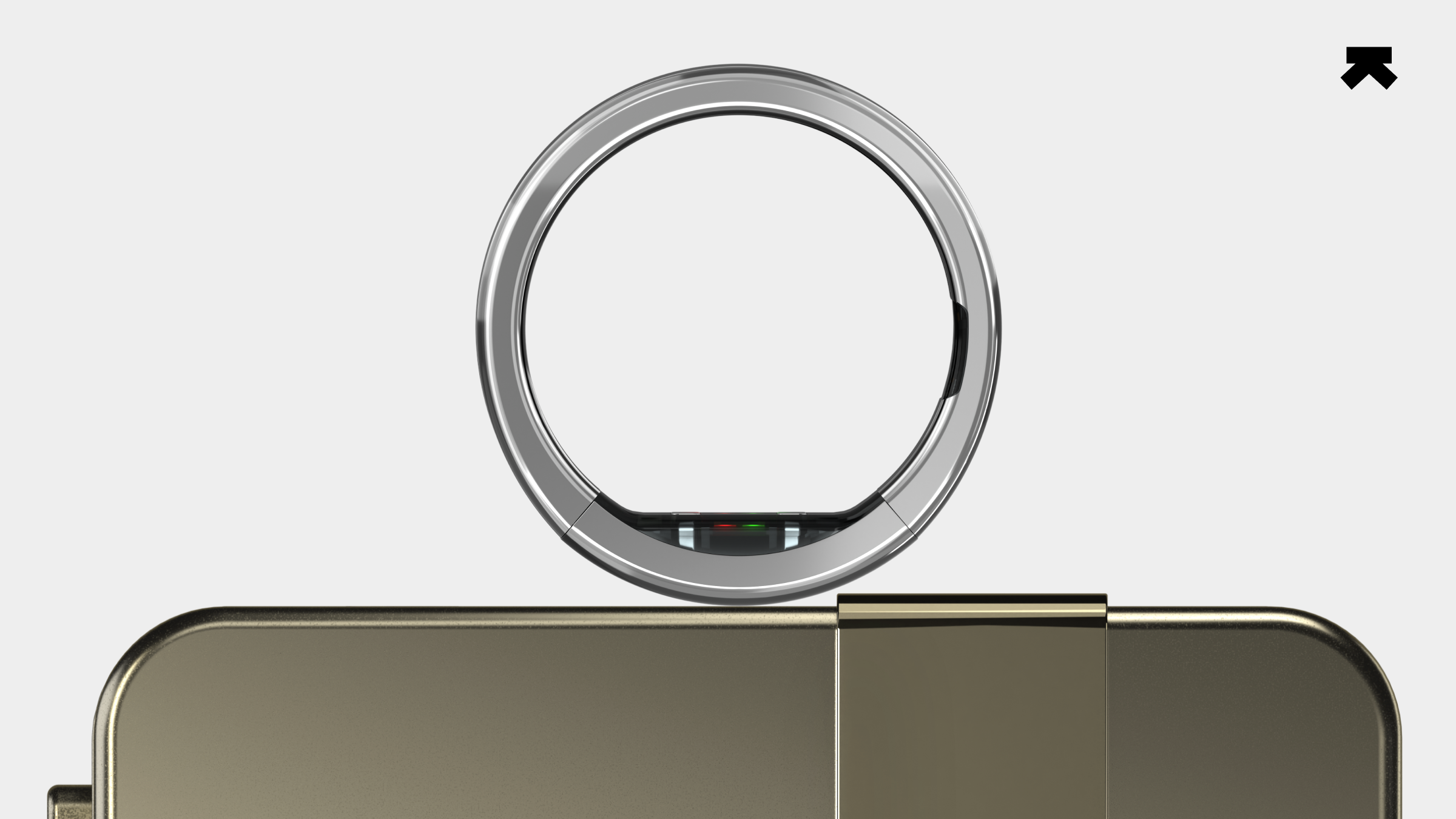
The “articles at issue” were the Ring Pro, a ring Ultrahuman had redesigned around a housing that, in the words the ruling records from its submission, was “a single, continuous, and integrally formed titanium Housing Tube.”1 The reprieve lasted seven months. On Oct. 22, Oura sued again in a Texas federal court, asserting two different patents, one of which had been issued two days earlier3.
Ultrahuman matters now because it is the company that has tested Oura’s patent strategy hardest. Rivals including Circular and RingConn took royalty-bearing licences4; Ultrahuman refused, was shut out of its largest market from October 2025 until the spring of 2026, engineered its way back and raised $70 million5 in September 2026 with Qualcomm’s venture arm among the backers. Along the way it disclosed a data breach. Its history is the clearest case study yet of whether a challenger can design around the category leader rather than pay it. (For the leader’s side of the story, see our profile of Oura and the rise of the smart ring.)
From delivery bikes to glucose patches
Ultrahuman’s founders came from logistics, not medicine. Mohit Kumar, its chief executive, founded the delivery start-up Runnr, which the food platform Zomato acquired in an all-stock deal6 in September 2017. Kumar and his co-founder, Vatsal Singhal, had been co-founders at Runnr7; the company’s own account says the idea for Ultrahuman came while Kumar was training at Tiger Muay Thai, a mixed-martial-arts camp in Thailand, and watching athletes use data and recovery protocols.7
The first product was software. Ultrahuman had run a subscription platform of home workouts, meditation and sleep content since 20198, and it officially launched9 on Jan. 6, 2021, ahead of CES, announcing an $8 million Series A from Nexus Venture Partners and Blume Ventures. That summer it began a closed beta of a skin-worn glucose sensor it called Cyborg, at $80 a month8. “We use medical grade sensors that have been used in the sports technology domain for the last 6-7 years with decent accuracy levels,” Kumar told TechCrunch8 at the time. The same report described a $17.5 million Series B led by Alpha Wave Incubation, with Steadview Capital, Nexus, Blume and angels including Zomato’s Deepinder Goyal, bringing the total raised to $25 million.
In April 2022 Ultrahuman bought LazyCo, maker of a gesture-control ring called Aina, to strengthen its hardware team10. By then the glucose product had been renamed M1.10

The ring that made the company
Ultrahuman’s first finger-worn device, simply called Ring, arrived in 202211, after a Kickstarter campaign that raised close to $400,00012, according to the retail agency that later placed its products in stores. The model that made its name followed on June 20, 2023. The Ring Air weighed as little as 2.4 grams7 in size 6, used titanium with a tungsten-carbide coating, promised about six days of battery life and sold for $349, £280 or €325. “Tracking your health should be a seamless experience, that’s why we went back to the drawing board to redesign the smart ring from the ground up to break the barriers of existing wearable form factor design,” Kumar said in the launch release7.
The ring sold. Retailbound, the agency, says it placed Ultrahuman in more than 4,000 stores12 in the United States and Canada, including Best Buy, Verizon, Costco and Walmart. In March 2024 the company raised $35 million in equity and debt13 from Blume, Steadview, Nexus, Alpha Wave and Goyal, and said it had become the second-largest smart ring maker while staying profitable. “This funding round marks a pivotal step forward in our journey to dominate the smart rings space, bringing us closer to our goal of being the market leader,” Kumar said.13 In the United States, Ultrahuman’s share of smart ring shipments rose from 11.5 percent in 2024 to 24.6 percent by the second quarter of 2025, IDC’s Jitesh Ubrani told TechCrunch14.
A platform with paid extras
Ultrahuman sells more than rings. Ultrahuman Home, a bedside box, was unveiled at CES in January 2024 at $34915. A November 2025 update added snore and cough analysis to its readings of air quality, carbon dioxide, temperature, humidity, noise and light, and the device then listed at $39916. The company says Home is HIPAA and GDPR compliant, has a physical microphone cut-off and deletes audio after two days17. Blood Vision, a blood-testing service covering more than 100 markers18, sends a phlebotomist to the customer’s home, TechCrunch reported19. At CES 2025 came Rare, Ring Air electronics in 18-karat gold or platinum shells priced from £1,499 to £1,79920.
The company’s marketing leans on the absence of a ring subscription, and Oura’s membership costs $5.99 a month21. The fuller picture is a free core with paid add-ons. In July 2024 Ultrahuman introduced PowerPlugs, opening the platform to third-party features, and added atrial fibrillation detection for $4.90 a month19, powered by FibriCheck, an app the FDA cleared in 201822. “The core of the platform in terms of features is a no-subscription experience,” Kumar said.19 Subscriptions accounted for about 16 percent of revenue23 in early 2026, and about 12 percent of users5 paid for PowerPlugs by September. In August 2025 Ultrahuman agreed to buy viO HealthTech, maker of the OvuSense fertility monitor, to power a paid Cycle and Ovulation Pro24 plug-in; the basic cycle feature stayed free.
We found no FDA clearance in the agency’s 510(k) database25 listing Ultrahuman itself as applicant. Ultrahuman markets its rings for wellness tracking; the regulated element in the AFib feature is the third-party algorithm. At launch, that feature was available only in Australia, the European Union, Saudi Arabia, Singapore, the United Kingdom and the United Arab Emirates.19
| Product | Launched | Launch price | What it does | Recurring fee |
|---|---|---|---|---|
| Cyborg / M1 glucose sensor | Beta June 2021 | $80/month (beta) | Skin-worn glucose monitoring | Yes |
| Ring Air | June 2023 | $349 | Sleep, heart rate, HRV, temperature, movement | No for core features |
| Home | Jan. 2024 (CES) | $349 | Room air, light, noise, temperature; later snoring | No |
| AFib detection (PowerPlug) | July 2024 | $4.90/month | FibriCheck rhythm algorithm on the ring | Yes |
| Rare | Jan. 2025 (CES) | £1,499–£1,799 | Ring Air sensors in gold or platinum | As Ring Air |
| Ring Pro | Feb. 2026 | $479 global; $399 US | Ring with up to 15-day battery and case | No for core features |
Sources: TechCrunch (notes 8, 15, 19, 23, 14); Ultrahuman launch release (note 7); Android Central (note 20); Gizmodo (note 21).
Factories in India and Texas
Ultrahuman’s rings for American buyers had been imported from India26. In March 2024 it said a recently added manufacturing facility, which it called UltraFactory, could support $200 million in annual revenue13. By November 2024 a plant under the same name was operating in Plano, Texas, run with the contract manufacturer SVtronics, and in May 2025 Ultrahuman said it would serve 100 percent of US Ring Air demand27 from there. “Bringing manufacturing to the US is a key step in our vision to empower more people with real-time health insights,” Kumar said.27 The plant was making about 400 rings a day against a goal of more than 500,000 a year, Android Central reported26.
The Texas plant became evidence in the patent case. The administrative law judge hearing Oura’s complaint questioned Ultrahuman’s claims about the facility, calling it a “concerning issue regarding Ultrahuman’s credibility,” according to Android Central26, which reported that the judge said slides showed the Ultrahuman logo added to SVtronics images. Oura’s blog went further, saying Ultrahuman was “specifically called out for having falsified evidence of a manufacturing facility in Texas.”28 Ultrahuman publicly described the plant as the first smart ring factory in the United States.26 Oura’s October 2026 complaint says SVTronics now makes the Ring Pro in Plano3.
The case Oura won
Oura first sued Ultrahuman in a Texas court in September 2023, alleging patent infringement and that Ultrahuman had gained proprietary information through former Oura employees and investors, TNW reported11. In April 2024 the U.S. International Trade Commission opened an investigation29 into Ultrahuman, RingConn and Circular. Circular settled within months, and the case narrowed to five claims of one patent, U.S. 11,868,178, which describes a ring whose curved housing holds a curved battery and a semi-flexible circuit board.1
An administrative judge found a violation on April 18, 20251. On Aug. 21, 2025, the full commission agreed29, issuing an exclusion order and cease-and-desist orders against Ultrahuman and RingConn and setting the bond during presidential review at zero. The next day, Aug. 22, Ultrahuman asked Customs to rule on a redesigned ring1. Oura said the orders took full effect once presidential review ended28 in October; retail stock already in the country could still be sold, TechCrunch reported23. Ultrahuman, for its part, filed a patent suit against Oura in the Delhi High Court in August 2025.23
RingConn took a licence and paid royalties, and in December the commission lifted the orders against it29; Ultrahuman did not oppose that petition. Its own requests to pause the orders while it appealed were denied by the commission30 and by the Federal Circuit, Law360 reported31. The cost, Kumar later said, was up to $50 million in lost sales14. IDC data showed Ultrahuman’s American share falling to low single digits by the end of 2025, while Oura’s rose to 85 percent.14
“We believe the Ring Air is a non-infringing model, and we are fighting that in federal court in the U.S.”Mohit Kumar, Ultrahuman chief executive, to TechCrunch (March 2026)
Ring Pro, the workaround
Ultrahuman unveiled the Ring Pro on Feb. 27, 2026, at $47923, for sale everywhere but the United States. It promised up to 15 days of battery life against four to six for the Ring Air, stored up to 250 days of data and weighed 5 to 6 percent more. A charging case holds about 45 days of charge, and a dual-core chip runs machine-learning models on the ring, the company said32. Engadget’s reviewer found the ring titanium inside and out33, except a resin window over the optical sensors; the Ring Air had paired a titanium shell with an epoxy-resin interior. The Pro is also built to be cut open quickly if its battery swells, a design choice the review singled out.
The construction was the legal argument. Ultrahuman told Customs that the new ring had no distinct inner and outer housing components, and that Oura’s own Ring 4 joined two metal structures with epoxy1. Customs agreed, on condition that importers certify what they bring in. American preorders opened on March 24 at $39914, $349 for the first 1,000 buyers, with shipping from May 15. Oura said: “The recent CBP decision is not a final or comprehensive ruling on Ultrahuman’s new design.”14 By September, Kumar said, American demand was running at 18 to 20 times5 available supply. The Ring Air is still listed on Ultrahuman’s website34 for buyers elsewhere.
Then came the October suit, over design patent D804,471 and utility patent 12,769,363. “Ultrahuman has a history of copying Oura’s innovations, as demonstrated by the 2025 ITC ruling against the company,” an Oura spokesperson told TechCrunch3. Kumar replied that Oura “has now chosen to assert different patents, including one that issued just two days before this lawsuit was filed,” and added: “There is no court order affecting Ring Pro, and it remains available to customers in the U.S.”3 Ultrahuman told the wearables site the5krunner that its American retail plans were unchanged35.
| Ring Air (2023) | Ring Pro (2026) | |
|---|---|---|
| Launch price | $349 | $479 global; $399 US |
| Weight | From 2.4 g (size 6) | 3.3–4.8 g |
| Battery (claimed) | Four to six days | Up to 15 days; 12 in Turbo mode |
| On-ring storage | About four days | Up to 250 days |
| Processor | Single core | Dual core |
| Housing | Titanium shell, epoxy-resin interior | One-piece titanium, resin sensor window |
| US status | Excluded since Oct. 2025 | Cleared by CBP, Mar. 6, 2026; sued Oct. 22, 2026 |
Sources: Ultrahuman release (note 7); TechCrunch (notes 23, 14, 3); Engadget review (note 33); CBP ruling H354023 (note 1).
A breach, disclosed late
On March 27, 2026, an unauthorized party gained read-only access to an internal analytics system, Ultrahuman said in a public notice36. Depending on the account, the data included contact and account details, order and transaction history and, for a smaller group, “some fitness related data.” The company said no passwords or payment data were involved and that it had found no evidence of misuse. It notified affected users by email on or after June 2, 67 days after the intrusion, and said it had informed regulators.36
The attackers used credentials stolen from an employee’s malware-infected laptop, and wellness data of about 0.1 percent of users was accessed, Ultrahuman told TechCrunch37, which calculated that this meant at least 700 people based on a previously reported 700,000 monthly users. The company declined to say whether data had been exfiltrated. “Our security alerting systems detected the incident within hours, and we closed the vulnerability swiftly,” Kumar said, explaining the delay as time spent establishing the scope.37 The notice lists new controls, including least-privilege access reviews and alerts on unusual data exports.36 Our explainer on how smart rings work covers what such data can reveal.
The numbers, and the evidence
Ultrahuman’s audited figures are reported through Indian filings. In the year to March 2025, revenue from operations rose to 565 crore rupees, about $64 million, from 105 crore, and the company posted its first profit, 73 crore rupees, after a loss of 38 crore, Entrackr reported2. Rings made up 91.3 percent of revenue, and the United States 61.4 percent. Nexus held the largest outside stake, 17.26 percent; the two founders together held 28.9 percent.2
Later figures come from the chief executive, not filings. Kumar put the annualized revenue run rate at about $150 million23 in February 2026 and at $140 million5 in September, up roughly 45 percent on a year earlier, with a target of $200 million by January 2027. He said the company had sold about 800,000 rings, might not be profitable in 2026 because of spending on stores and clinical studies, and saw 2028 as the earliest window for a stock listing.5 The September round valued Ultrahuman at $365 million, a person familiar with the matter told TechCrunch; Inc4238 also reported the $70 million raise.
The scientific record is thinner. The peer-reviewed papers we found on Ultrahuman products were written by its own staff: a 2024 study in Scientific Reports of the M1 sensor in 105 Indian adults39, whose authors included Kumar and Singhal and declared stakes in the company, and a 2026 analysis of a ring-derived “Cardio Age” score in 442 users40, all of whose authors were employees. Kumar’s figures for the AFib algorithm, 91.86 percent sensitivity and 97.59 percent specificity, are the company’s own19. Independent testing is mixed: Live Science found the Ring Air precise at rest but said it consistently underestimated41 heart rate during intense exercise against a chest strap.
How we checked
We searched PubMed on Nov. 21, 2026, for studies naming Ultrahuman and found none that independently compared an Ultrahuman ring with laboratory polysomnography. We queried FDA’s 510(k) records for Ultrahuman as applicant and found none. Trade-court dates come from the ITC’s Federal Register notices and the Customs ruling; company figures are attributed to the company.
What comes next
Kumar’s next bet is to turn the ring into an input device. “All ring devices today are like trackers,” he told TechCrunch5. Ultrahuman is building a ring on Qualcomm silicon alongside its current Nordic Semiconductor chips, and says rings already sold will gain game-controller and AI features through software. “A game controller never reads your heart rate and your temperature, but this one does,” Kumar said.5 Labcorp, which joined the round, is exploring with Ultrahuman whether ring signals combined with blood tests can flag cardiovascular and fertility risks.
At home, the competition is arriving. Oura launched its Ring 4 in India in March 2026, in a market where IDC put Ultrahuman’s 2025 share at 30.4 percent14, the largest. Abroad, two courts will decide much of Ultrahuman’s future: the Federal Circuit, on whether the Ring Air infringed, and the Texas court, on whether the Ring Pro does. Its rivals chose differently; see our profiles of RingConn, which took a licence, and Samsung’s Galaxy Ring, now also in Oura’s sights, and the market context in The Alexi Report.
Timeline
- Sept. 2017Zomato acquires Runnr, the delivery start-up founded by Mohit Kumar.
- 2019Ultrahuman’s workout and sleep subscription platform goes live in Bengaluru.
- Jan. 2021Official launch ahead of CES; $8 million Series A disclosed.
- Aug. 2021$17.5 million Series B; glucose sensor in closed beta.
- Apr. 2022Acquires LazyCo, maker of the Aina ring.
- June 2023Ring Air launches at $349.
- Sept. 2023Oura sues Ultrahuman in Texas.
- Jan.–Mar. 2024Home unveiled at CES; $35 million raised.
- Apr. 2024ITC opens Investigation 337-TA-1398.
- Nov. 2024Texas UltraFactory begins operating with SVtronics.
- Aug. 21, 2025ITC finds a violation of the ’178 patent; exclusion and cease-and-desist orders.
- Oct. 2025Presidential review ends; Ring Air imports barred.
- Feb. 27, 2026Ring Pro launched outside the US at $479.
- Mar. 6, 2026Customs rules the Ring Pro outside the exclusion order.
- Mar. 27, 2026Intruder gains read-only access to an internal analytics system; users told from June 2.
- Sept. 3, 2026$70 million round with Qualcomm Ventures and Labcorp.
- Oct. 22, 2026Oura sues over the Ring Pro in Texas.
Sources and notes
- HQ H354023: Ruling Request; U.S. International Trade Commission; Limited Exclusion Order; Investigation No. 337-TA-1398; Certain Smart Wearable Devices, Systems, and Components Thereof. U.S. Customs and Border Protection, Customs Rulings Online Search System (CROSS), Mar. 6, 2026.
- Ultrahuman reports Rs 565 Cr revenue and Rs 73 Cr profit in FY25. Entrackr, Sept. 22, 2025.
- Oura sues rival Ultrahuman again, threatening its US smart ring comeback. TechCrunch, Oct. 22, 2026.
- Oura sues Samsung, Amazfit, as it demands royalty payments from its remaining smart ring rivals. Android Central, Nov. 19, 2025.
- Qualcomm backs Ultrahuman in $70M round on bet to turn smart rings into computers. TechCrunch, Sept. 3, 2026.
- Zomato acquires delivery start-up Runnr. Mint, Sept. 13, 2017.
- Ultrahuman unveils an ultra-comfortable fitness wearable, the Ultrahuman Ring Air. Ultrahuman via ResponseSource, June 20, 2023.
- Ultrahuman raises $17.5M, touting a wearable blood glucose tracker. TechCrunch, Aug. 16, 2021.
- Ultrahuman Launches At CES. Ultrahuman via PR Newswire, Jan. 6, 2021.
- Fitness app Ultrahuman buys wearables firm LazyCo. pharmaphorum, Apr. 12, 2022.
- The two rings: Finland’s Oura sues Ultrahuman over rival wearable. TNW, Nov. 15, 2023.
- How A Metabolism Tracking Ring Went From Kickstarter to a Store Near You. Kickstarter (guest post by Retailbound), Sept. 2, 2026.
- Ultrahuman raises $35m for smart ring. eeNews Europe, Mar. 21, 2024.
- Ultrahuman ramps up US push with Ring Pro as Oura tightens its grip. TechCrunch, Mar. 24, 2026.
- Smart ring maker Ultrahuman announces tracker for home ‘health’. TechCrunch, Jan. 9, 2024.
- Ultrahuman Home can monitor your coughs and snores as you sleep. Trusted Reviews, Nov. 25, 2025.
- Ultrahuman Home. Ultrahuman, accessed Nov. 21, 2026.
- Blood Vision. Ultrahuman, accessed Nov. 21, 2026.
- Ultrahuman’s smart ring gets AFib detection. TechCrunch, July 16, 2024.
- Ultrahuman Rare kicks off the luxury smart ring era with massive price. Android Central, Jan. 7, 2025.
- The Best Smart Ring You've Never Heard of Has Finally Cleared U.S. Customs. Gizmodo, May 25, 2026.
- 510(k) Premarket Notification K173872: FibriCheck (Qompium NV). U.S. Food and Drug Administration, decision Sept. 28, 2018.
- Ultrahuman bets on redesigned smart ring to win back US market after Oura dispute. TechCrunch, Feb. 27, 2026.
- Ultrahuman acquires viO HealthTech to launch enhanced cycle and ovulation tracking. TechCrunch, Aug. 15, 2025.
- 510(k) Premarket Notification database. U.S. Food and Drug Administration, searched Nov. 21, 2026.
- Ultrahuman promises '100%' US Ring Air sales from Texas, despite Oura's ITC challenge. Android Central, May 8, 2025.
- Ultrahuman Expands Texas "UltraFactory" for Ring AIR Production. HIT Consultant, May 8, 2025.
- Oura Secures Decisive Legal Victory with ITC Patent Ruling. Oura (company blog), updated Oct. 21, 2025.
- Certain Smart Wearable Devices, Systems, and Components Thereof; Modification of Limited Exclusion Order and Rescission of Cease and Desist Orders (Inv. No. 337-TA-1398). U.S. International Trade Commission, Federal Register Vol. 90, No. 237, Dec. 12, 2025.
- Notice of Commission Decision to Deny Ultrahuman Respondents' Motion to Stay the Remedial Orders (Inv. No. 337-TA-1398). U.S. International Trade Commission, Dec. 15, 2025.
- Ultrahuman Loses Bids To Halt ITC Order In Oura Patent Case. Law360, Dec. 16, 2025.
- Ultrahuman's new Pro ring comes with 15 days battery life. Engadget, Feb. 27, 2026.
- Ultrahuman Ring Pro review: The future of smart rings looks a lot like its present. Engadget, May 14, 2026.
- Ultrahuman Ring AIR. Ultrahuman, accessed Nov. 21, 2026.
- QUICK READ: Ultrahuman says Ring Pro stays on US sale. the5krunner, Oct. 23, 2026.
- Notice of a security incident — March 2026. Ultrahuman, last updated June 2, 2026.
- Ultrahuman says hackers accessed customers' wellness data via internal tool. TechCrunch, June 3, 2026.
- Ultrahuman Bags $70 Mn To Build An Integrated Healthtech Platform. Inc42, Sept. 3, 2026.
- Metabolic health tracking using Ultrahuman M1 continuous glucose monitoring platform in non- and pre-diabetic Indians: a multi-armed observational study. Scientific Reports (PubMed record), Mar. 18, 2024.
- Wearable-derived cardiovascular fitness age and its lifestyle correlates in 442 adults. Frontiers in Digital Health (PubMed record), 2026.
- Ultrahuman Ring AIR review. Live Science, Sept. 28, 2024.
Disclosure: Alexi designs the Xloop smart ring and the Alexi app, which compete with some of the products discussed here. This article was produced by Alexi Research; every figure is linked to its original source, and companies’ own claims are attributed to them.
Discover Xloop for yourself.